
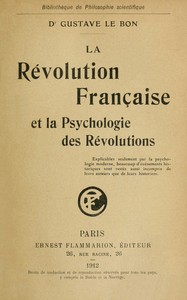
La Révolution Française et la psychologie des révolutions by Gustave Le Bon
Gustave Le Bon's book isn't a straight history of the French Revolution. Instead, it uses that explosive period as a case study. He looks past the kings and generals to focus on the crowd itself. The book argues that when people come together in a mass, a new "collective mind" takes over. This mind is emotional, impulsive, and easily swayed by images and slogans. Le Bon walks us through how this psychology fueled the revolution's rapid swings—from hopeful uprising to paranoid bloodshed.
Why You Should Read It
This book is a mind-bender. Written in the late 1800s, it feels like it's analyzing modern social media mobs or political rallies. Le Bon's ideas about how leaders use symbols and simple, repeated phrases to control crowds are downright chilling in their accuracy. It made me look at current events differently. While some of his broader theories about race and gender are very outdated and problematic, his core observations about group behavior are incredibly sharp. It's less about judging the revolution and more about understanding the human machinery behind it.
Final Verdict
Perfect for history buffs who want to go deeper than the timeline, and absolutely essential for anyone curious about psychology, politics, or how societies crack under pressure. It’s not a light read, but it’s a provocative one. Be ready to wrestle with some controversial ideas, but you’ll come away with powerful tools for thinking about the madness of crowds, both then and now.
This is a copyright-free edition. Share knowledge freely with the world.






George Sanchez
1 year agoAfter hearing about this author multiple times, it manages to explain difficult concepts in plain English. I will read more from this author.